Nobel Prize in Physics
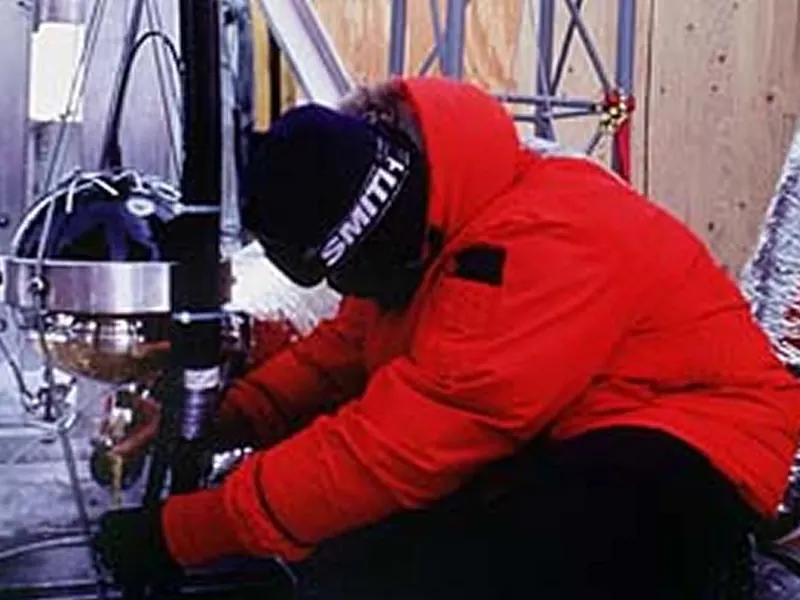
A telescope made of ice
It doesn't point at the sky. It is buried up to a mile and a half deep in the South Pole ice.
2:52 film Lives Before Us
Home › This week's edition
This week's edition · Nobel Prize in Peace
Law firms in apartheid South Africa wouldn't hire Navi Pillay. So in 1967 she opened her own.
The film plays from YouTube. Open on YouTube
This week, Navi Pillay won the 2026 Nobel Peace Prize. She is 85, a judge, and the daughter of a bus driver from Durban, South Africa. She remembers that white law firms refused to employ her because she was a woman, poor and not white.
So in 1967 she opened her own law practice. Under apartheid she defended government opponents and challenged the treatment of political prisoners, and for years she was denied a passport. In the seventies her work helped win political prisoners on Robben Island the right to see a lawyer. In 1995 she became an acting judge of South Africa's High Court, the first woman of colour to sit there. Then she moved to the tribunal for Rwanda's genocide, where in 1998 three judges, Pillay among them, ruled that sexual violence can be genocide when it is meant to destroy all or part of a protected group. She later served at the International Criminal Court and, from 2008 to 2014, as the UN High Commissioner for Human Rights.
The Nobel Committee praised her efforts to promote peace and international law. Israel's government condemned the award, rejecting findings of the UN inquiry she chaired. This film follows her life and work and takes no side in that dispute.
When the news came, she was at a conference in Nuremberg, in the courtroom where the Nazi leaders were tried.
How we made thisArchive footage and photographs, checked against the original sources. Full credits are listed with the film on YouTube.
The weekly email
Nobel Prize in Physics
It doesn't point at the sky. It is buried up to a mile and a half deep in the South Pole ice.
2:52 film
Nobel Prize in Medicine
A pond alga's tiny door that opens in light, put into nerve cells. A tool for understanding the brain, not a cure.
2:51 film
Nobel Prize in Literature
A scrapbook for her brother, a poem two thousand years old, and a folded strip in a box.
2:19 film
Nobel Prize in Chemistry
Molecules come in left and right “hands”. A small imbalance can grow, like an uneven vote turning into a landslide.
2:57 film